
Home Maintenance Tasks You’re Probably Forgetting: The HVAC Edition
When the seasons shift across Naperville, Warrenville, Wheaton, and Plainfield, your heating and cooling system bears the brunt of every temperature swing. Yet most homeowners only think about their HVAC equipment when something goes wrong. By that point, what could have been a simple tune-up has turned into an expensive emergency repair or a premature system replacement. At Four Suns Heating & Cooling, we’ve spent years helping local homeowners catch small issues before they snowball, and we’ve noticed a pattern of overlooked maintenance tasks that quietly drive up energy bills, shorten equipment lifespans, and create indoor air quality problems.
The Filter Change That Almost Nobody Does Often Enough
Manufacturers typically recommend changing standard one-inch air filters every 30 to 90 days, but real-world conditions in Illinois homes often demand more frequent changes. Pet dander, pollen, basement dust, and the dry particulate that comes with running forced-air heat for months can clog a filter faster than the label suggests. A clogged filter restricts airflow, forces your blower motor to work harder, drops efficiency, and eventually leads to frozen evaporator coils in summer or overheated heat exchangers in winter.
If you own a high-efficiency pleated filter or a media cabinet with a four- or five-inch filter, the replacement interval extends, but it isn’t infinite. We recommend writing the install date on the cardboard frame and setting a calendar reminder. As a family-owned and operated company, we service all makes and models of systems, which means we’ve seen every type of filter setup imaginable, and we’re happy to advise you on the right MERV rating for your equipment without oversizing in a way that strains your blower.
Outdoor Condenser Care That Goes Beyond a Quick Rinse
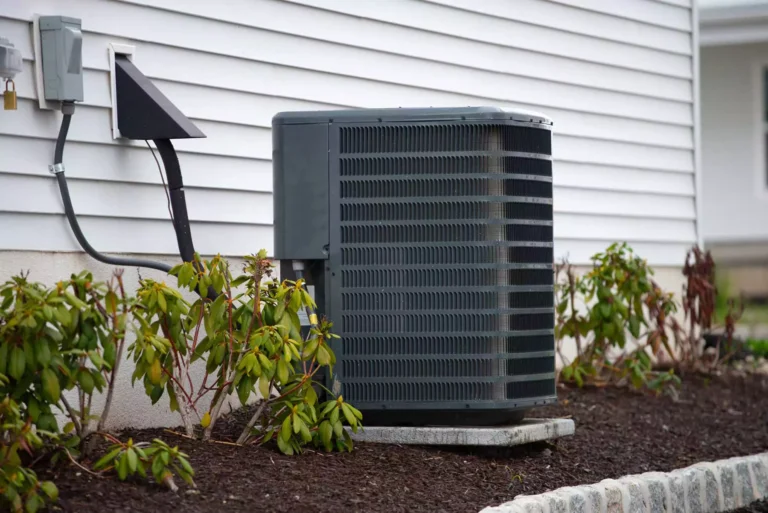
Your outdoor condenser unit lives a hard life. Cottonwood seeds, grass clippings, mulch dust, and falling leaves all gather in the fins and around the base. When that debris accumulates, heat transfer suffers and the compressor runs hotter and longer than it should. A garden hose rinse from the top down, with the disconnect pulled for safety, removes most surface contamination, but the fins themselves benefit from periodic professional cleaning with the proper coil solution.
Equally important is the clearance around the unit. Shrubs and decorative grasses should sit at least two feet away on all sides, with five feet of clearance above. We’ve responded to “no cooling” calls in Plainfield where the only problem was a landscaping bed that had grown into the cabinet over a single summer.
The Drain Line, Humidifier, and Other Forgotten Components
Condensate drain lines are notorious for clogging with algae and biofilm. When that PVC line backs up, water pools in the secondary pan or, in worse cases, spills onto finished ceilings below. A simple seasonal flush with a wet/dry vacuum at the exterior termination, paired with the occasional vinegar treatment at the cleanout, prevents the kind of water damage that no homeowner wants to discover.
Whole-house humidifiers mounted on the furnace also need annual attention. The evaporator pad calcifies, the solenoid valve sticks, and the bypass damper gets left in the wrong position for the season. A neglected humidifier can either flood your furnace or do nothing at all while you wonder why your hardwood floors are gapping in February.
An Annual Checklist Homeowners Can Actually Use
Here are the tasks we encourage every homeowner to track on a yearly basis:
- Spring cooling prep. Replace the filter, clear vegetation around the condenser, test the thermostat in cooling mode before the first hot day, and schedule a professional AC tune-up.
- Fall heating prep. Inspect the flue, replace the filter again, test carbon monoxide detectors, change the humidifier pad, and schedule a furnace inspection.
- Monthly visual checks. Look at the filter, listen for unusual noises, and confirm that all supply and return registers are unobstructed by furniture or rugs.
- Quarterly drain maintenance. Pour a cup of distilled vinegar into the condensate cleanout to discourage algae growth during cooling season.
When DIY Stops and Professional Service Begins
Some maintenance belongs in the hands of a trained technician. Refrigerant charge verification, electrical capacitor testing, gas pressure adjustments, heat exchanger inspections, and combustion analysis all require specialized tools and licensing. Skipping these inspections is how minor wear becomes catastrophic failure.
Four Suns Heating & Cooling offers complete heating, cooling, and air quality systems for both residential and commercial applications, and we customize new systems to meet your individual needs when replacement eventually becomes the smarter investment. Whether you want a seasonal tune-up, a second opinion on a repair quote, or a conversation about upgrading aging equipment, give us a call before small surprises become costly ones.