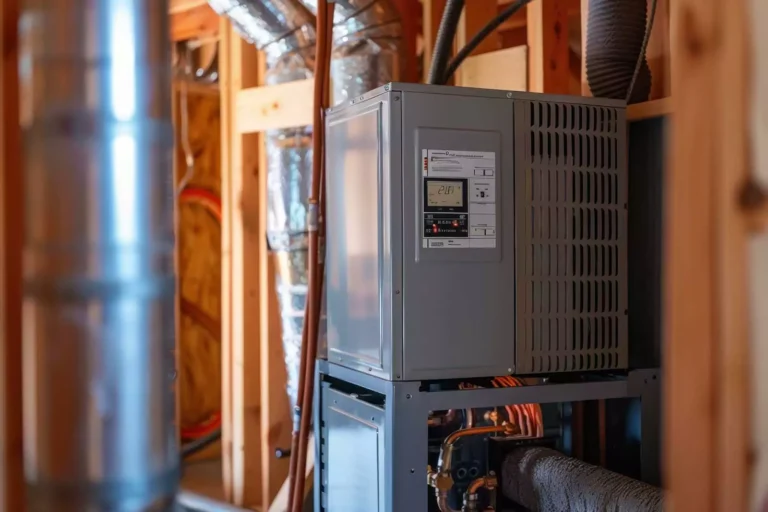
It is a January morning in North Aurora, the outdoor temperature has dropped into the teens, and the furnace that ran fine last night now blows nothing but cold air through the vents. The thermostat display is lit, but the burners never fire. Situations like this rarely announce themselves in advance, and they always seem to happen on the coldest day of the season. When a heating system fails in the middle of an Illinois winter, a fast and accurate repair is not a luxury. It is a necessity for the safety and comfort of everyone inside the building. This is the exact type of problem Four Suns Heating & Cooling, Inc. exists to solve.
We are a family-owned and operated company that offers complete heating, cooling, and air quality systems for residential and commercial applications. We service all makes and models of systems, and we will customize new systems to meet your individual needs. When the topic is heating repair in North Aurora, our goal is simple: restore reliable, safe warmth to your home or business as quickly and correctly as possible.
Understanding What Goes Wrong With a Heating System
A modern furnace or heat pump is a coordinated set of mechanical, electrical, and combustion components. Each part must operate within its designed range for the whole system to produce heat safely. When one component drifts out of specification, the failure often shows up somewhere else entirely. A dirty flame sensor, for example, can cause a furnace to ignite and then shut down seconds later, which many homeowners mistake for a control board failure. Diagnosing the true root cause instead of the symptom is what separates a lasting repair from one that fails again a week later.
The most common heating problems we see in North Aurora fall into predictable categories. Ignition and flame sensing faults keep gas furnaces from staying lit. Failed inducer motors or blocked flue passages trip safety switches designed to prevent carbon monoxide buildup. Worn blower motors, cracked heat exchangers, faulty limit switches, and failing gas valves all interrupt the heating cycle in different ways. On heat pump systems, reversing valve issues, low refrigerant charge, and defrost control problems reduce heating output when the weather turns cold. Our technicians are trained to recognize the signatures of each of these failures.
How Our Heating Repair Process Works
Every repair visit follows a deliberate sequence designed to find the fault fast and fix it correctly. We do not guess at parts or replace components on a hunch. Instead, we work through the system methodically, using measurements and manufacturer specifications to confirm what is actually failing before we recommend any repair.
- Initial assessment: We listen to how the system is behaving, review any error codes on the control board, and confirm the symptoms you have observed firsthand.
- Electrical and safety verification: We test voltage, amperage draw, and the continuity of safety switches such as the high-limit and rollout switches to confirm nothing is bypassed or damaged.
- Combustion and airflow inspection: On gas furnaces, we check the burners, flame sensor, inducer motor, and flue for proper operation and safe venting.
- Component testing: We isolate the suspected part, measure it against its rated specification, and confirm the failure before replacement.
- Repair and cycle testing: After the repair, we run the system through complete heating cycles to verify it fires, heats, and shuts down correctly every time.
This structured approach protects you from paying for parts you do not need and gives you confidence that the repair addresses the real problem. We also take time to explain what failed and why, so you understand the condition of your equipment when we leave.
The Technical Details That Matter During a Repair
Heating repair is a precision task. A gas furnace, for example, is designed to operate within a specific temperature rise across the heat exchanger, usually printed on the equipment data plate. If the temperature rise is too high, the exchanger overheats and its lifespan shortens dramatically. If it is too low, the furnace short cycles and wastes fuel. Measuring temperature rise during a repair tells us whether airflow, gas pressure, or a dirty component is the underlying issue.
Gas pressure is another specification we verify with a manometer. Manufacturers set manifold pressure to precise values, often around 3.5 inches of water column for natural gas. A furnace running with incorrect gas pressure will either underperform or overfire, and both conditions create safety and efficiency concerns. On the electrical side, we confirm that blower and inducer motors draw current within their rated amperage. A motor pulling excess amperage is a motor headed for failure, even if it still spins today. Catching that early can turn an emergency into a planned, convenient repair.
Heating Repair for Homes and Businesses
The needs of a single-family home and a commercial building differ in scale and complexity, and we adjust our approach accordingly. In a residential setting, the priority is often a single furnace or heat pump that keeps the whole home comfortable. Fast diagnosis and a warm house are what matter most to families dealing with a cold snap.
Commercial heating systems frequently involve rooftop units, multiple zones, or larger capacity equipment that serves employees, customers, and inventory. Downtime in a business setting can affect operations directly, so we work to minimize disruption and restore heat with as little interference to your day as possible. Because we service all makes and models, we are equipped to handle the wide variety of equipment installed across North Aurora and the surrounding Naperville, Plainfield, Warrenville, & Wheaton, IL region, from older standard-efficiency furnaces to modern high-efficiency condensing units and heat pumps.
Signs You Should Call for Heating Repair
Many heating failures give warning signs before they become total breakdowns. Paying attention to these early indicators can prevent a comfortable evening from turning into a cold, uncomfortable night. If you notice any of the following, it is worth having the system inspected before the problem grows worse.
- Uneven heating: Some rooms stay cold while others reach temperature, which often points to airflow or ductwork problems.
- Short cycling: The furnace turns on and off rapidly without completing a full heating cycle, a sign of overheating, sensor issues, or airflow restriction.
- Unusual noises: Banging, grinding, or squealing sounds usually indicate a mechanical component under stress.
- Rising energy bills: A sudden jump in heating costs often means the system is working harder than it should to produce the same warmth.
- Weak or cold airflow: Air that never gets warm suggests an ignition, combustion, or heat pump refrigerant issue.
Acting on these signs early gives us the chance to make a smaller, less costly repair before the failure cascades into something larger. It also improves the safety of your system, especially when the warning signs involve combustion or venting.
Why North Aurora Homeowners Choose Four Suns Heating & Cooling, Inc.
Reliable heat during an Illinois winter depends on more than replacing broken parts. It depends on understanding how the entire system works together and repairing it with attention to the specifications that keep it safe and efficient. Our technicians bring that level of care to every visit, whether the job is a simple flame sensor cleaning or a complex heat exchanger diagnosis.
As a family-owned business, we treat every home and business we serve the way we would want our own family cared for. We take the time to do the job right, explain what we find, and leave your heating system running the way it was designed to. When your furnace or heat pump needs attention in North Aurora, Four Suns Heating & Cooling, Inc. is ready to restore your comfort and keep it that way through the coldest months of the year.