When It’s Time to Replace the Furnace in Your North Aurora Home
A furnace that short cycles, produces uneven heat from room to room, or drives up your gas bill each winter is telling you something. In North Aurora, where January lows regularly drop into the single digits and wind chills push lower, a heating system nearing the end of its service life becomes a liability. Most gas furnaces last 15 to 20 years, and once repairs start stacking up or the heat exchanger shows signs of cracking, replacement is usually the smarter financial choice.
Deciding to install a new furnace is not a decision most homeowners make often, which is why the process can feel unfamiliar. At Four Suns Heating & Cooling, Inc., we walk you through every step, from the initial load calculation to the final system test, so you understand what you are getting and why. We are a family-owned and operated company that offers complete heating, cooling, and air quality systems for residential and commercial applications, and heating installation is one of the areas where careful workmanship makes the biggest difference in long-term comfort and cost.
Common Questions About Heating Installation
Homeowners in North Aurora often ask whether they truly need a new furnace or whether one more repair will get them through another season. The answer depends on the age of the equipment, the frequency of breakdowns, and the efficiency rating. A furnace that is more than 15 years old, requires frequent parts, and carries a low efficiency rating will cost more to keep running than to replace. Newer high-efficiency units convert far more of the fuel they burn into usable heat.
Another frequent question involves fuel type and system choice. Natural gas furnaces remain the most common option in this area, but heat pumps, dual-fuel systems, and high-efficiency condensing furnaces all have a place depending on your home. We service all makes and models of systems, and we will customize new systems to meet your individual needs, so the recommendation you receive is based on your house, not a one-size-fits-all package.
How We Size and Select the Right Furnace
Correct sizing is the foundation of a heating installation that performs well for decades. A furnace that is too large will heat quickly and shut off just as fast, cycling on and off repeatedly. This short cycling wears out components, creates temperature swings, and wastes fuel. A furnace that is too small will run constantly during cold snaps and still struggle to keep up. Both problems trace back to skipping a proper load calculation.
We perform a Manual J load calculation that accounts for the specific characteristics of your home. This process considers several factors that directly affect how much heating capacity you actually need:
- Square footage and ceiling height: the total volume of conditioned space the furnace must warm.
- Insulation levels: the amount and quality of insulation in walls, attic, and floors.
- Windows and doors: the number, size, and efficiency of all openings that lose heat.
- Air infiltration: how tightly the home is sealed against drafts and outside air.
- Layout and orientation: the floor plan and which directions the home faces.
Once the calculation is complete, we match a furnace with the right heating output, measured in BTUs, to those needs. We also review the AFUE rating, which tells you what percentage of fuel becomes heat. A 96 percent AFUE furnace, for example, converts nearly all of its fuel into warmth, while older units often operated at 70 to 80 percent. The efficiency difference shows up directly on your monthly gas bill.
Our Installation Process from Start to Finish
A clean, code-compliant installation protects both the performance and the safety of your new system. Rushed or careless work leads to callbacks, comfort complaints, and premature failures. Our team follows a consistent process on every heating installation so nothing gets overlooked.
The work generally moves through these stages:
- In-home assessment: we evaluate your current system, ductwork, venting, and gas supply, then complete the load calculation.
- System recommendation: we present furnace options that fit your home, budget, and efficiency goals with clear explanations of each.
- Safe removal of the old unit: we disconnect and remove the existing furnace, handling refrigerant and gas connections properly.
- New furnace placement and connection: we set the new unit, connect gas, electrical, venting, and condensate lines to code.
- Ductwork and airflow verification: we check duct connections and static pressure to confirm the system moves air correctly.
- Startup and testing: we fire the unit, verify combustion, check safety controls, and confirm the thermostat operates as expected.
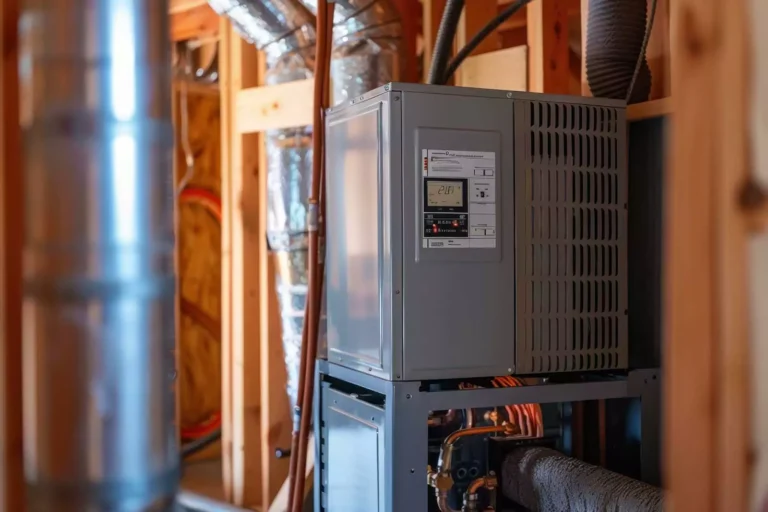
Proper venting deserves special attention with modern condensing furnaces. These units produce cooler exhaust and acidic condensate, so they vent through PVC piping rather than a traditional metal flue and require a drain path for the condensate. Getting this detail right prevents corrosion, water damage, and dangerous flue gas problems down the road.
Technical Details That Affect Long-Term Performance
Beyond the furnace itself, several technical factors determine how well your new heating system performs. Static pressure in the duct system is one of the most overlooked. If ducts are undersized or restricted, the blower works harder, airflow drops, and the furnace runs hotter than intended. We measure static pressure during installation and address restrictions when we find them.
Blower technology also matters. Many newer furnaces use variable-speed ECM blower motors that adjust airflow gradually rather than switching fully on and off. This produces steadier temperatures, quieter operation, and better filtration because air moves through the system more consistently. Two-stage and modulating gas valves take this further, allowing the furnace to run at a lower output during mild weather and ramp up only when needed. The result is fewer temperature swings and less wear on the equipment.
Heating Installation for Homes and Businesses
Residential heating installation carries different demands than commercial work, and we handle both. In a typical North Aurora home, the focus is on even room-to-room comfort, quiet operation, and efficiency that keeps winter utility costs manageable. We size equipment to the actual living space and pay attention to details like return air and thermostat placement that many homeowners never think about but feel every day.
Commercial heating installations often involve larger loads, rooftop units, multiple zones, or specialized ventilation requirements. Downtime in a commercial space affects employees and customers, so reliability and correct sizing carry even more weight. Whether we are installing a single furnace in a residence or coordinating heating equipment for a commercial building, the same disciplined approach applies. We proudly serve North Aurora along with Naperville, Plainfield, Warrenville, & Wheaton, IL and the surrounding communities.
Why Choose Four Suns Heating & Cooling, Inc.
Choosing an installer is as important as choosing the furnace. Even the best equipment underperforms when it is sized incorrectly or installed carelessly. As a family-owned and operated company, we treat each installation as work that reflects on our name in the community. That means honest recommendations, thorough load calculations, and a finished job that is tested before we consider it complete.
When your old furnace is struggling through another North Aurora winter, a properly planned installation restores reliable heat and lowers your operating costs at the same time. Reach out to Four Suns Heating & Cooling, Inc. to schedule an assessment, and we will help you select and install a heating system built to keep your home or business comfortable for years to come.